09.01.26 06:22 GMT
Stakeholders discuss transformative growth strategies at Chongqing automotive forum
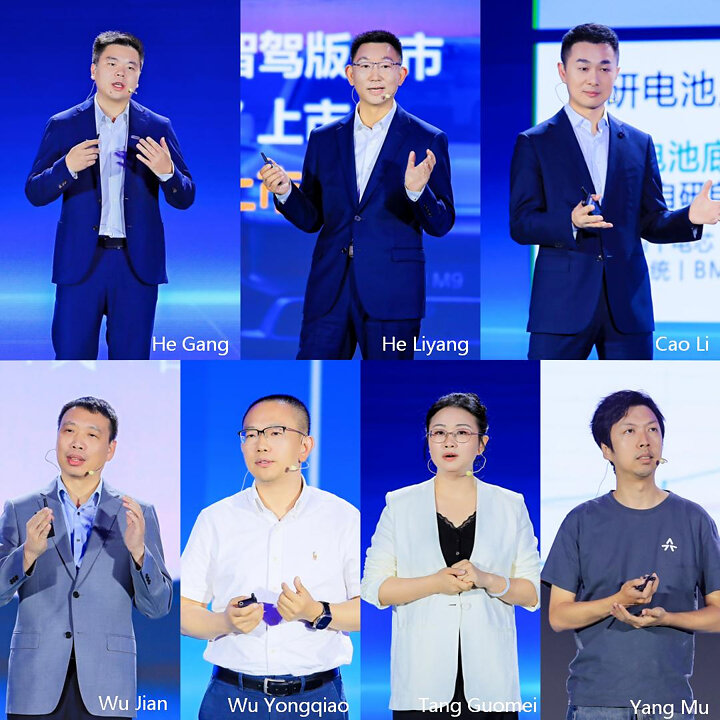
In Chongqing, a pivotal city in China's automotive industry, key stakeholders gathered to discuss strategies for transformative growth at the 2026 Automotive New Quality Productive Force Development Forum. The event, held in Jiulongpo District, brought together business leaders from the auto manufacturing and intelligent driving sectors to address critical issues facing the industry.
As electric vehicle production and intelligent driving technology continue to advance, the focus has shifted from economies of scale to quality-led transformative growth. This transformation is particularly significant for Chongqing, a leading producer of automobiles and motorcycles aiming to establish itself as a high-end player in the global market.
During the forum, He Gang, vice president of Changan Automobile, highlighted the importance of enhancing user safety in the face of growing intelligent driving penetration. He emphasized that the company is addressing this by improving driving stability under extreme conditions and developing advanced systems for hazard detection. He Gang noted that Changan's all-weather dark-room laboratory and world models for smart driving are key to building a comprehensive safety system.
Safety was a recurring theme, with He Liyang, president of Seres, stressing the company's commitment to safety and performance. He stated, "Safety is the utmost luxury worth pursuing," reflecting Seres' dedication to user security.
Cao Li, senior vice president of Leapmotor, discussed the importance of full-domain self-reliance in research and manufacturing. With more than 65% of its core parts developed in-house and 18 super factories contributing to a closed-loop industrial cluster, the company aims to maintain quality, cost efficiency, and iteration speed.
The forum also tackled the controversial issue of powertrain technology. Wu Jian, a member of GAC Group's strategy committee, argued that traditional overseas powertrain technology routes have limitations in intelligent adaptation. He emphasized that powertrains with Chinese characteristics can only be developed by focusing on technologies that suit local scenarios and integrate well with vehicle intelligent systems. Wu Jian shared that after two decades of independent R&D, GAC Group now boasts three powertrain technology series for range-extended, plug-in hybrid, and hybrid electric vehicles.
On the topic of "going global," Wu Yongqiao, president of Bosch's intelligent driving and control system division in China, discussed the company's approach to local innovation while aligning with overseas regulations. This strategy is designed to support the global expansion of Chinese auto companies.
To address industry challenges, Tang Guomei, deputy president of Sevnce Robotics, focused on resolving security dilemmas in special scenarios. Yang Mu, CTO of Chongqing Afari Technology, a local smart driving business, presented a solution by integrating large language models with intelligent driving models. This approach aims to strengthen smart vehicles' capabilities in scene understanding, logical reasoning, and risk prediction, addressing issues of insufficient cognitive generalization and causal reasoning.
The forum underscored the ongoing efforts of Chinese auto companies to navigate the complexities of transformative growth, focusing on safety, self-reliance, and innovation. These strategies are essential for Chongqing and the broader industry to maintain a competitive edge in the global automotive landscape.